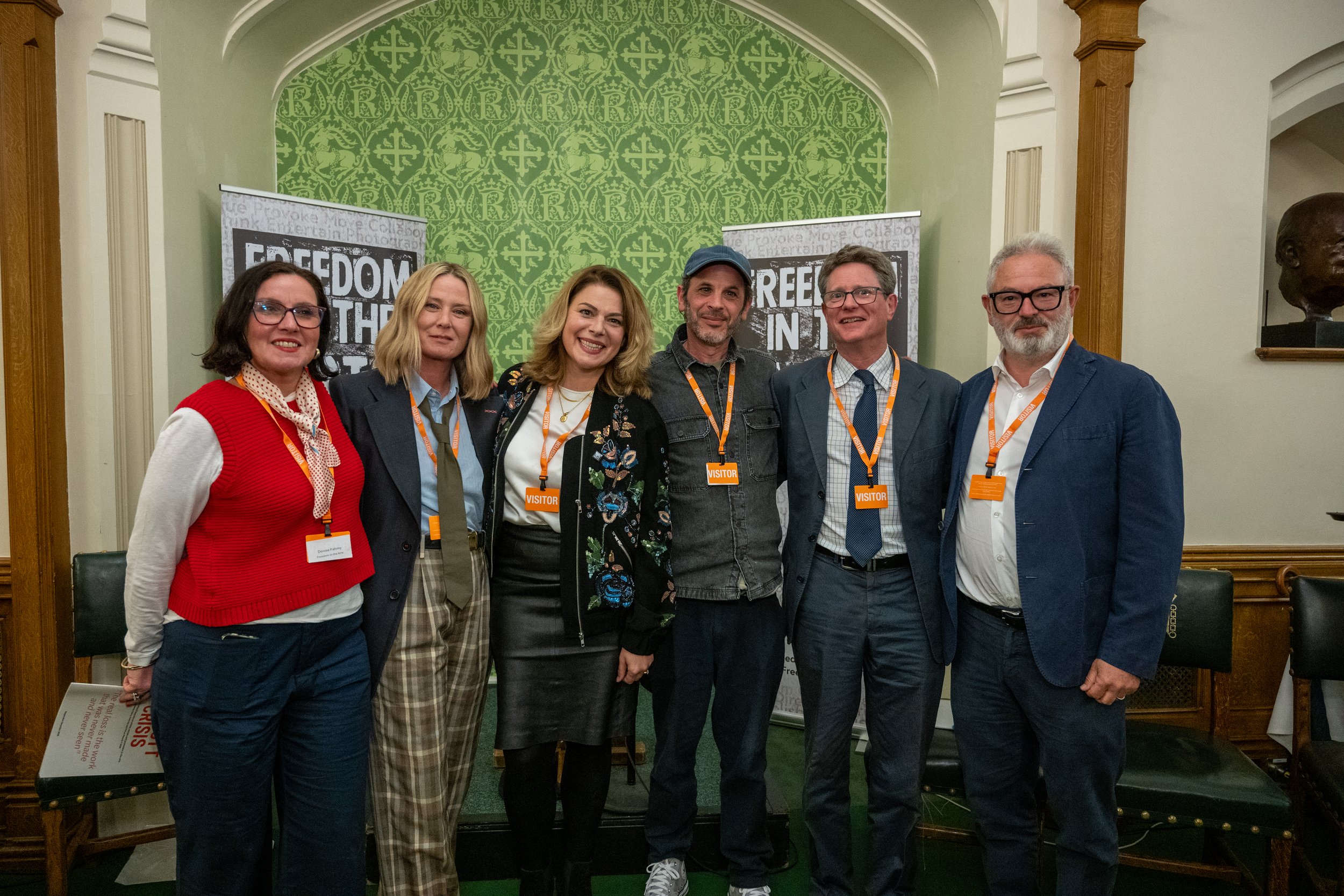
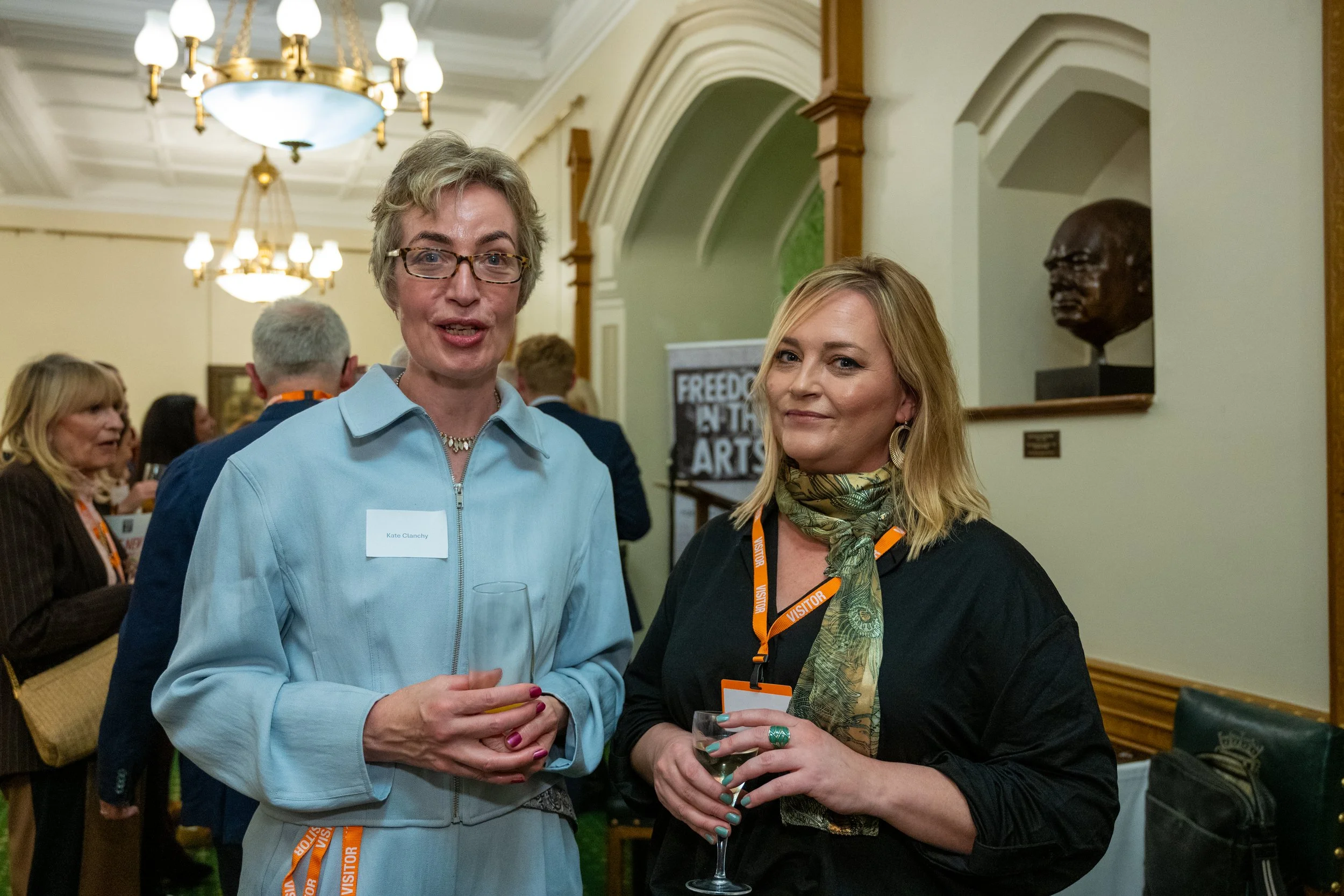
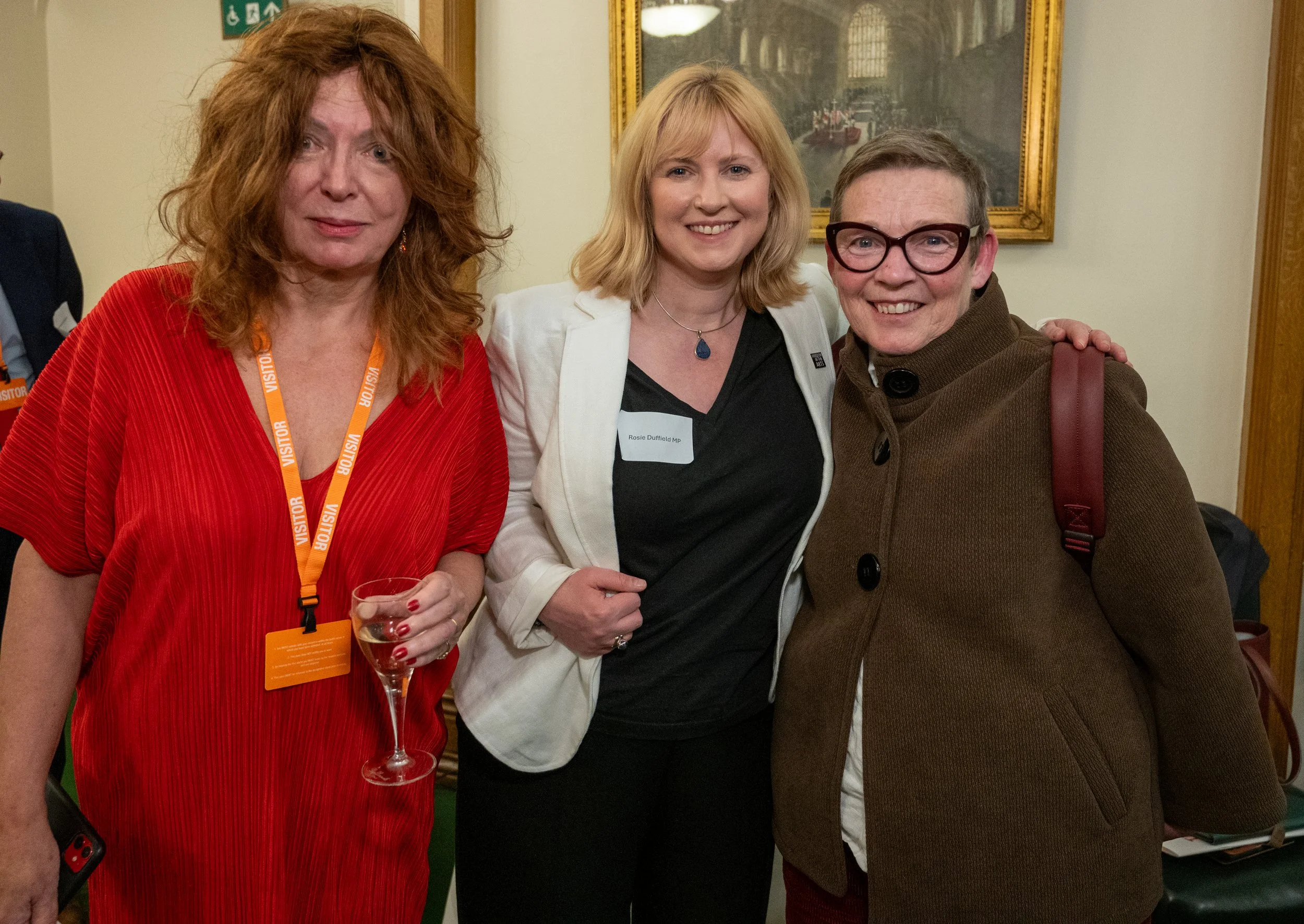
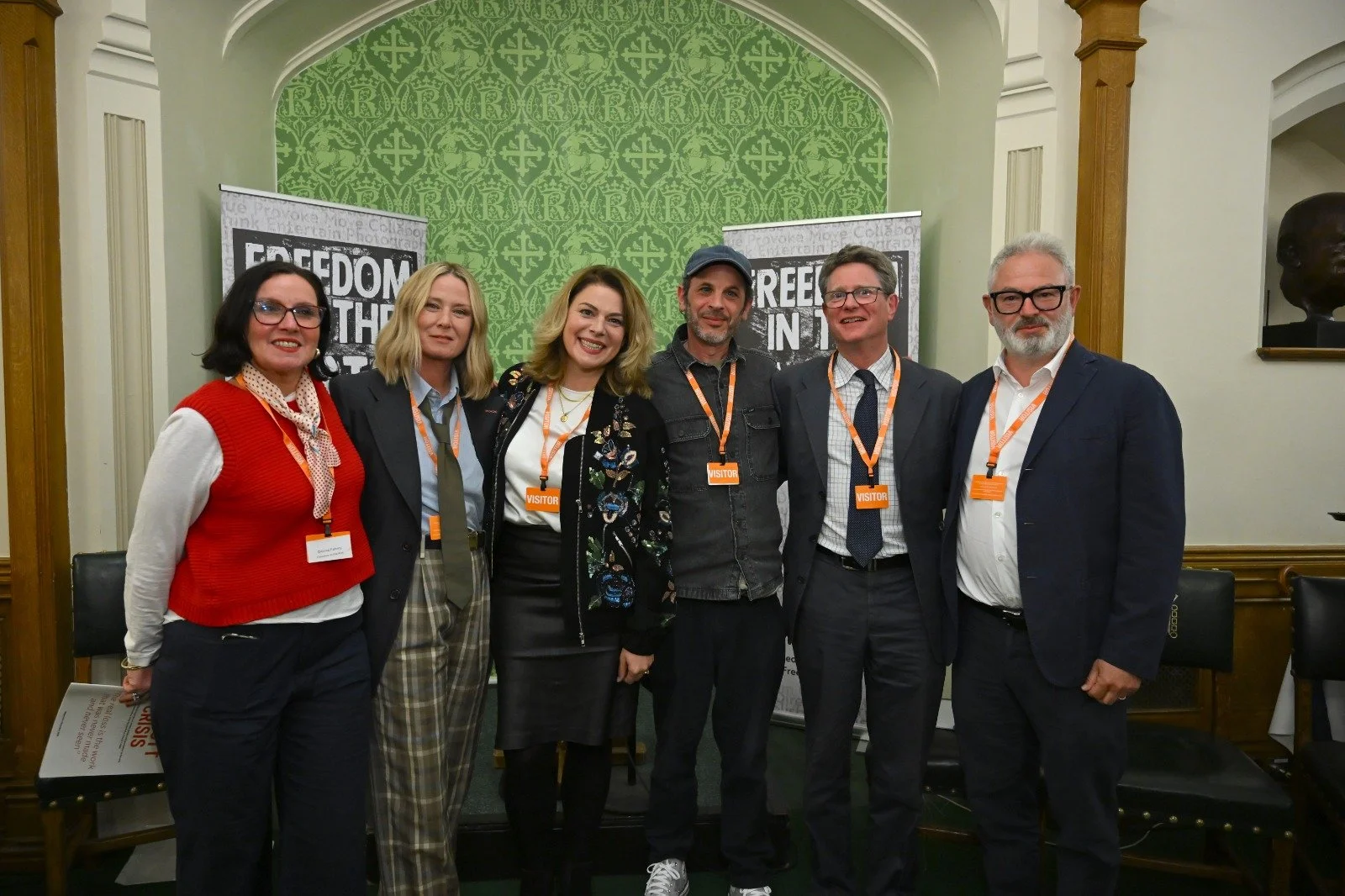
Freedom in the Arts Parliamentary Launch
Churchill Room, Palace of Westminster
27 April 2026
Mark Tughan on venue pressure, risk and freedom of expression
At the parliamentary launch of The New Boycott Crisis and the Art Beyond Boycott Toolkit, Mark Tughan spoke from the perspective of a venue leader, describing how fear, HR pressure and reputational anxiety can quietly distort decision-making, and why practical support matters if venues are to hold their nerve.
Mark Tughan is founder and CEO of The Glee Club, one of the UK’s leading live comedy venue groups. Since launching the first Glee Club in 1994, he has helped build one of the country’s most influential circuits for stand-up and live performance. He has become an increasingly important voice on artistic freedom, venue responsibility and the pressures facing cultural organisations in an atmosphere of cancellation and fear. His stance has since been reflected publicly in the Glee Clubs’ decision to sign up to a freedom of expression policy created with Freedom in the Arts.
Churchill Room, Palace of Westminster, 27 April 2026
Speaking after Josh Breslaw, Mark Tughan brought the institutional perspective to the evening. Drawing on his experience running one of Britain’s best-known comedy venue groups, he described how shows can be quietly swerved before any public complaint has even materialised, and why venues need practical guidance if they are not to let fear become their default programming policy.
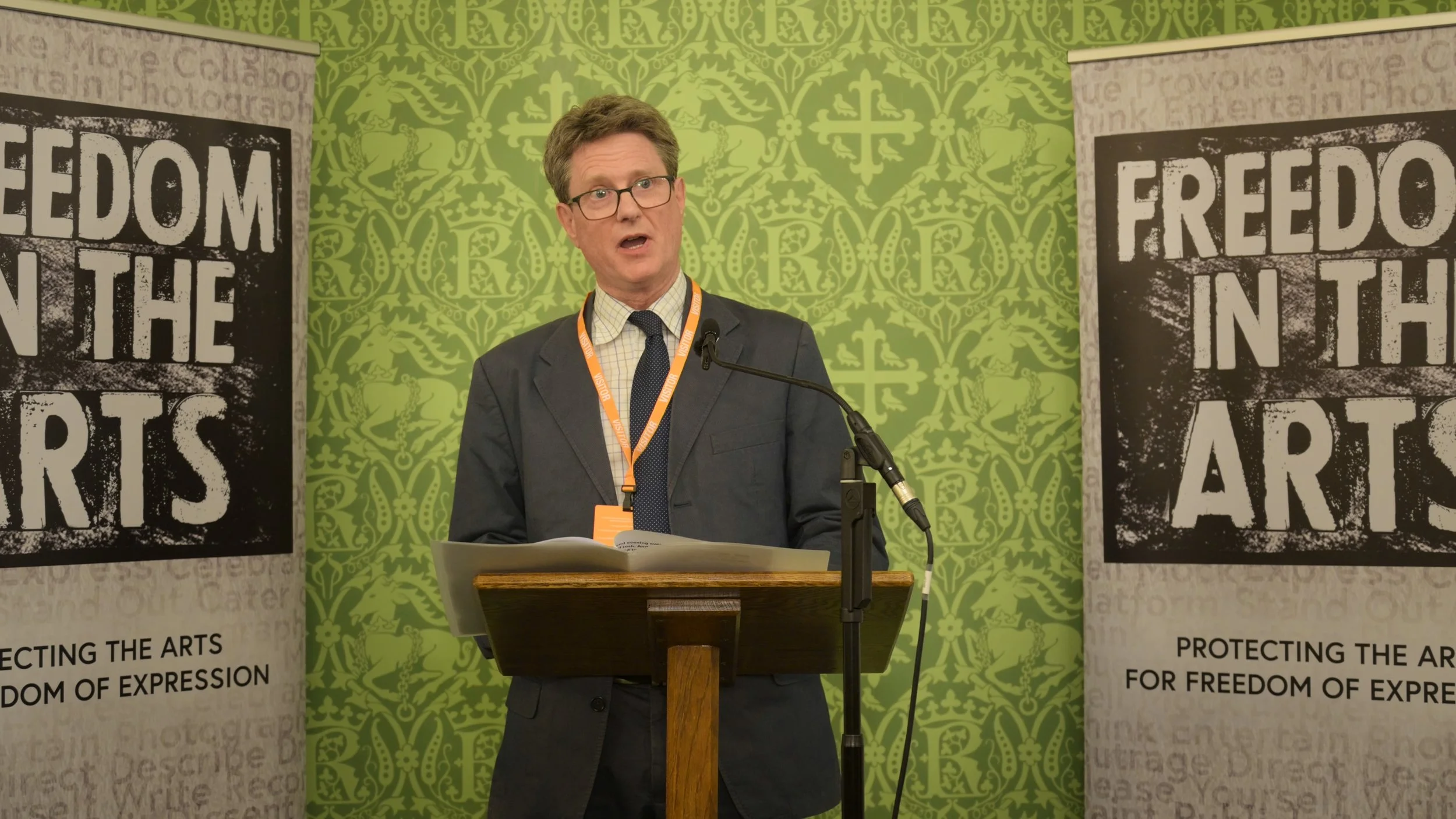
Full Speech Video Link HERE
Good evening everyone and thank you Nigel , Rosie and Josh. And can I say it’s a huge honour to be invited to this event and to speak to you about the industry I love – live comedy.
My name is Mark Tughan and I am the founder and ceo of a small but slightly significant group of live entertainment venues, called the glee club, specialising mainly in comedy. We started in 1994. We may only be 5 venues but we’ve managed to become the biggest group of mid sized venues and would probably be described as the market leader.
I say slightly significant because although we are only 5 venues, we are one of the largest bookers of what we call “circuit talent” in the country. And because we’re the biggest group of comedy clubs, people have in the past looked to us to see what I hope would be considered best practice.
I want to say first that the world of live comedy is by and large a happy place – after all we are in the business of making people laugh - , the sector isn’t, from what I can see, tearing itself apart in quite the same way as seems to be happening in others areas - music and perhaps publishing, and our own brushes with cancel culture, whilst real, tend to be slightly more occasional. This is course notwithstanding the fact that one of the biggest cancel stories EVER involves one of our own, namely comedy writer Graham Linehan. I don’t think we even need to go there now, the man has been vindicated a thousand times over and it’s a source of regret (to me at least) that some of his peers in our industry still can’t seem to find the strength to acknowledge any regret for the way he was treated.
Our recent brushes with cancel culture started with me receiving a fatwa from someone from the small heath area of Birmingham who called on us to cancel a show by the Dutch comedian Hans Teeuwen, well known for his absurdist, provocative and confrontational style, but also for allegedly “mocking Islam”. In this case we did proceed but I would point out that the West Midlands Police’s attitude when we spoke with them was that we should just save ourselves the hassle, and cancel that show. They said they would not commit to any presence whatsoever on the night of the show to keep an eye on the threatened protest, which in the end didn’t materialise.
Next up Jerry Sadovitz. His show was famously dropped by the Pleasance at the Edinburgh Festival in 2022. He already had a tour planned for after the festival and we had booked him at 2 of our venues. Cue panic amongst my management team. How on earth were we to deal with this, it was front page news. In the end, we also proceeded, there was little public backlash, but this was when the “problem” morphed into a bit of an HR issue – what about the staff? Should we be subjecting them to this potentially offensive comedian. And it’s a fair question. In the end we reminded staff that taking shifts was optional, as was actually watching the show – but it still didn’t stop a couple of staff duly watching, taking great offence, and then making complaints. My HR advice was that we had taken the steps required of…and I quote “a reasonable and considerate employer”.
So what’s the problem, I hear some say. You’re not cancelling shows, you seem to be holding your nerve?
We have recently booked “Britains most Cancelled Comedian” Andrew Lawrence. This was something however where I personally had to intervene to ensure it was booked. First it was – he’s not funny. Then it was - what about a backlash? Then it became - what about the staff? It has also become: what about the audience of deplorables – what if THEY abuse the staff? It was abundantly clear that this was being presented to me as just too mush hassle, let’s just leave it. And that is what angered me, and made me think…
We could be I and suspect we were declining shows pre-emptively, and thus we were censoring ourselves and some acts without it even being known. No paper trails, no proof. And that, to me, whilst not the crime of the century, is insidious.
I decided that’s just wrong. Already a free speech advocate, to me, quietly swerving a show means we’ve already surrendered or lost the argument for free expression because it’s assumed – pre-ordained even - that such a booking will end up causing so much grief, that it’s just better not doing it in the first place. The Art that never happens?
And it also struck me that similar conversations may have also been happening within my business without me knowing. I simply can’t be across every enquiry, every judgement call. That shows could just quietly be being swerved, quietly declined, based solely on behind closed doors whispers and, let’s be honest, political prejudices, struck me as quite beyond the pale.
Look, as a private business we are fully entitled to book what we want. But we are also gatekeepers, and as such I feel we have a responsibility to the wider arts world to ensure that we don’t just swerve and avoid controversial or alternative shows because of fear of backlash, or HR hassle.
And this is where Freedom in the Arts comes in. Let me be clear, I don’t think it was a case of my management team going out of their way to deplatform people but they too were (indeed they are) paralysed with fear. Fear of activists, fear that the public would disapprove in some way, fear for harming our reputation, and also fear we would simply be entering an HR hellhole. I can tell you as a small business, we have little time for endless HR, let alone costly PR for reputation management.
So when I saw that FITA had really thought this through, and done serious legwork in terms of intellectual underpinnings, practical advice and actual tools to assist venues, to me it was a no brainer. Most people in my sector are tiny businesses operating on shoestrings, both financially and in management bandwidth and thus to have practical guidance and institutional backing is critical.
I’m going to go a step further and say that in my opinion, seeing venues signing up to a FOE agenda (like this) is also exactly what the public want and expect. My sense is that people are fed up with the thought police, as well as the taste police either overtly (or in my case covertly censoring) so called “problematic” acts OUT of the cultural sphere. I hope and expect that venues which DO positively champion FOE will be rewarded by their customers, and that venues that opt out of FOE will suffer accordingly and deservedly at the box office, as well as reputationally, for their reluctance to embrace TRUE diversity – namely diversity of thought and opinion, whether legally protected or not. To me this is good business as well as the right thing to be doing.
In summary, I think cancel culture has made swathes of the arts (mine included) hugely risk averse, and in comedy, if you don’t take risks, it gets dull, it gets safe, it gets a bit boring. For me this is about regaining the confidence to take risks again, bringing the public with us (which I think we can do) and in the end winning a bit of trust back from consumers, some of whom I think believe comedy has just become too safe, and operating within boundaries set by the groupthink of the bubble it has become comfortable in. I want to bring back the sense that in a comedy club – almost anything goes, and funny is just that – funny.
But Behind all these decisions and pressures is the artist, and the question of what kind of culture we are asking artists to create within. So it is with great pleasure to hand over to a legend – Roisin Murphy.