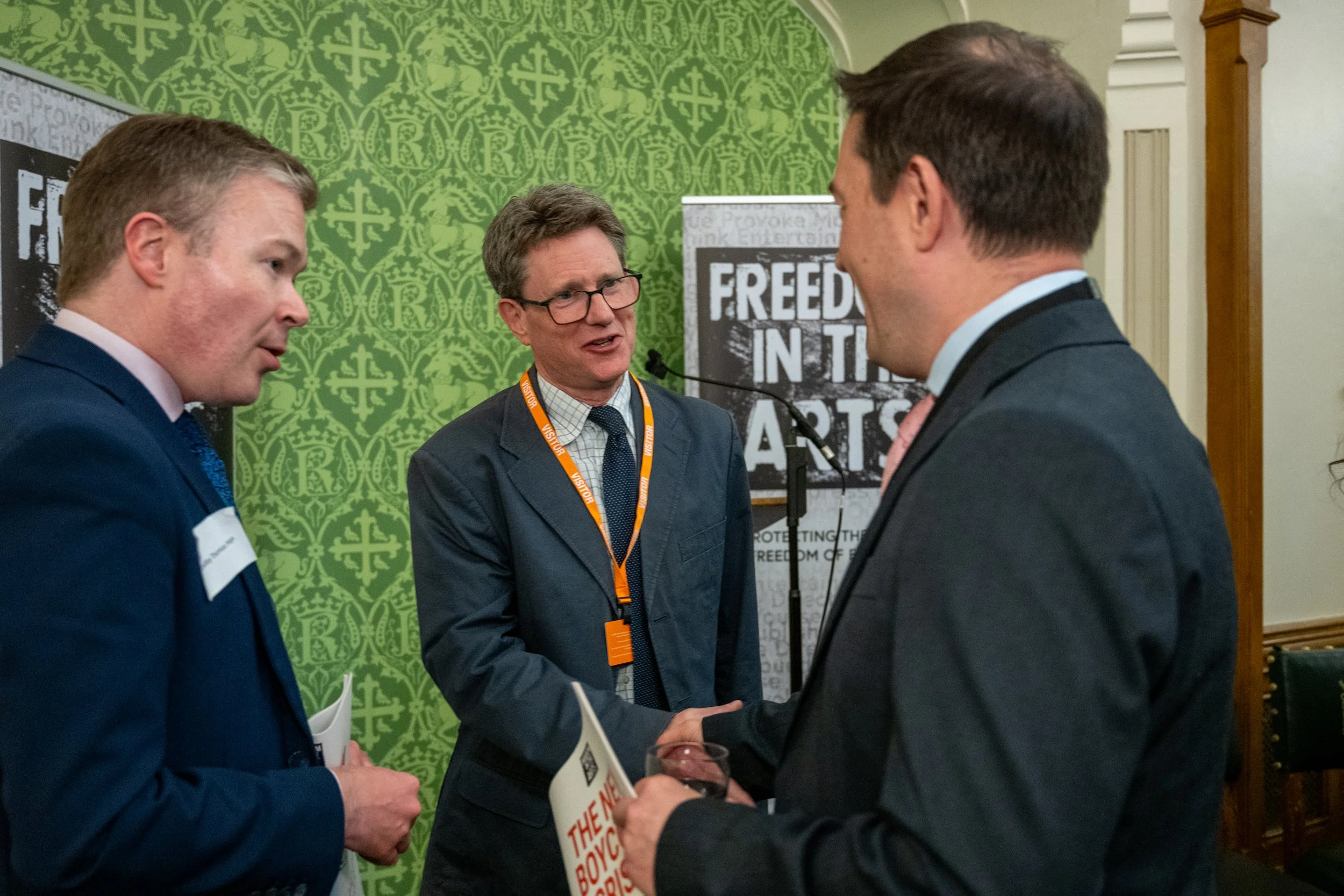
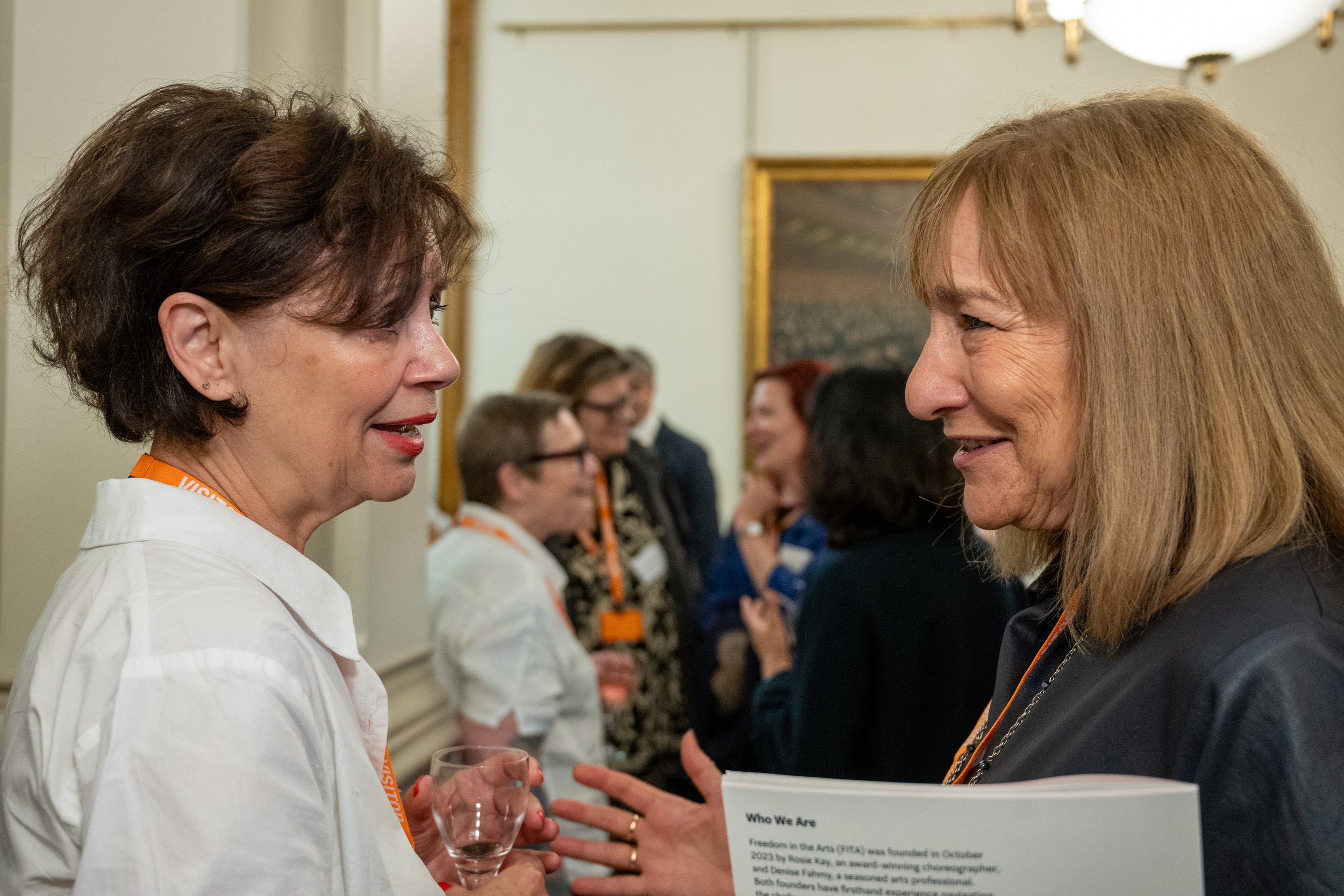
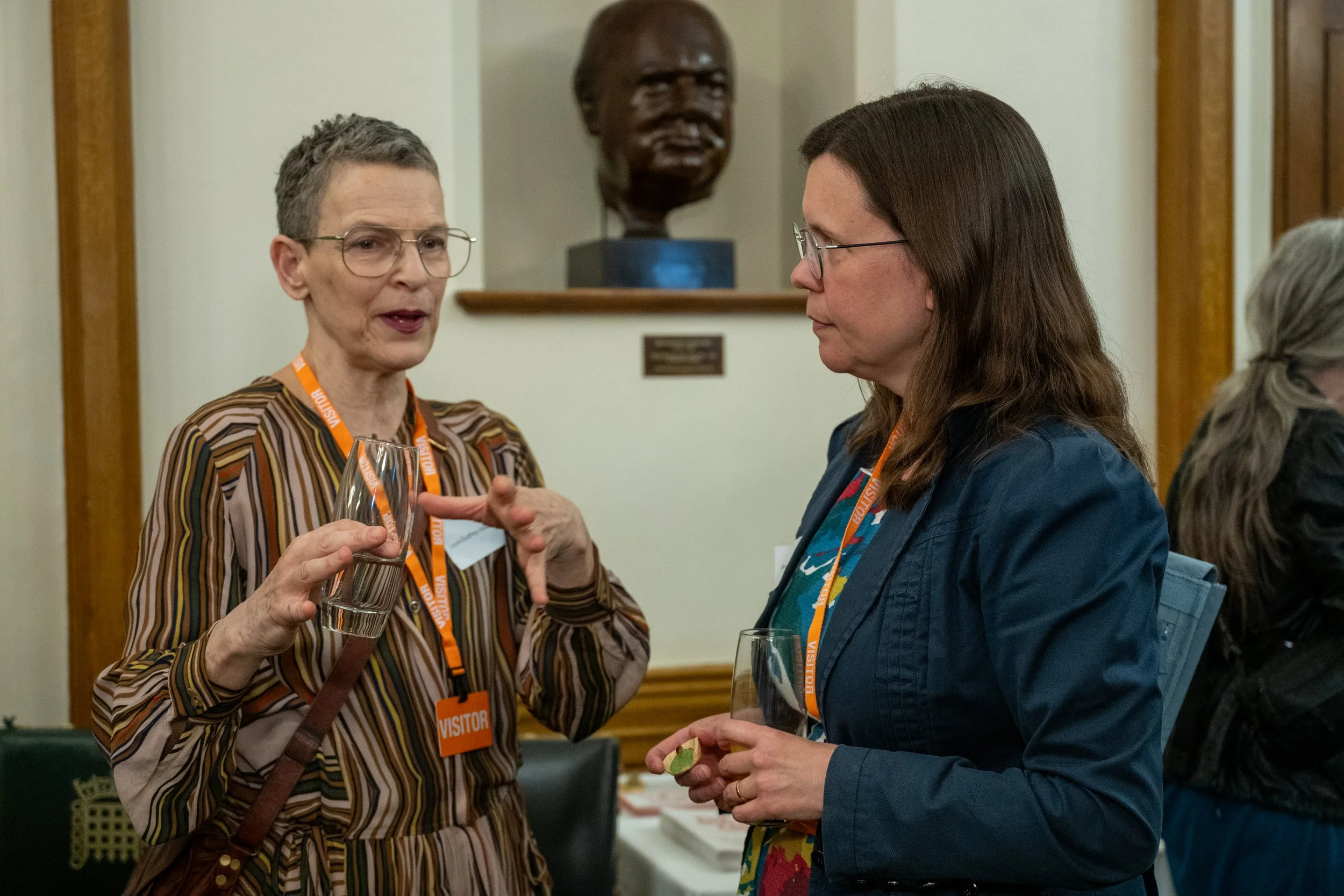
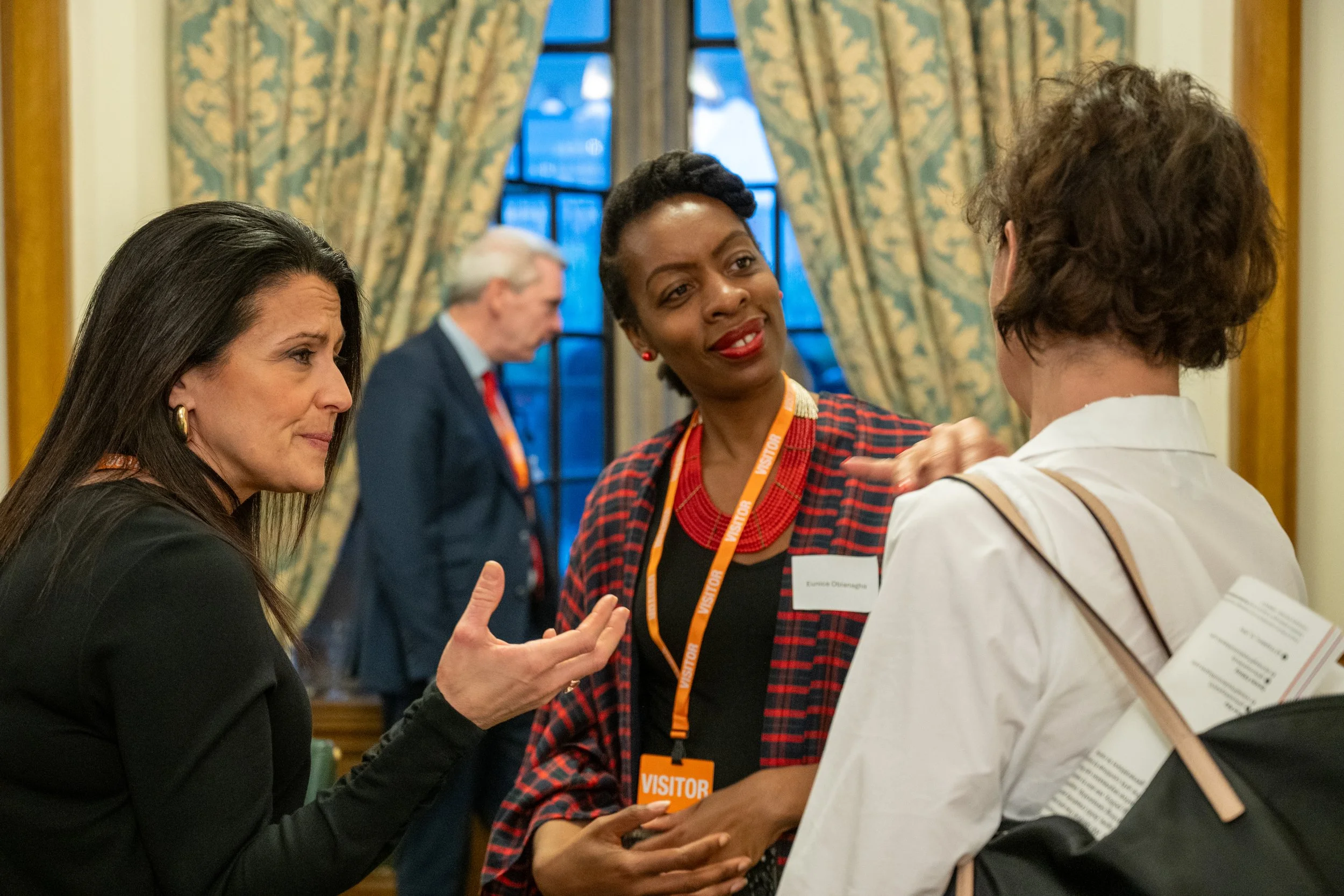
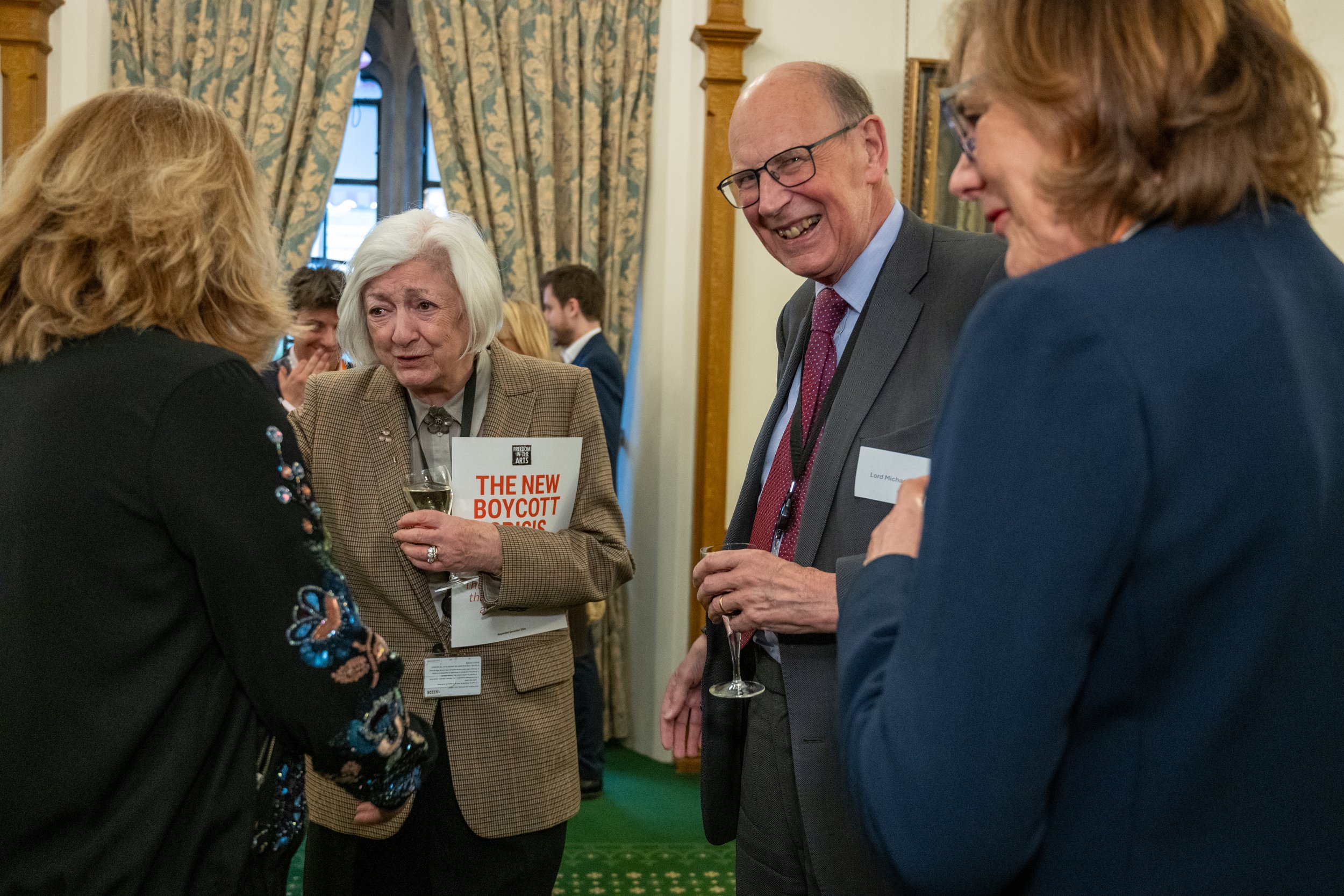
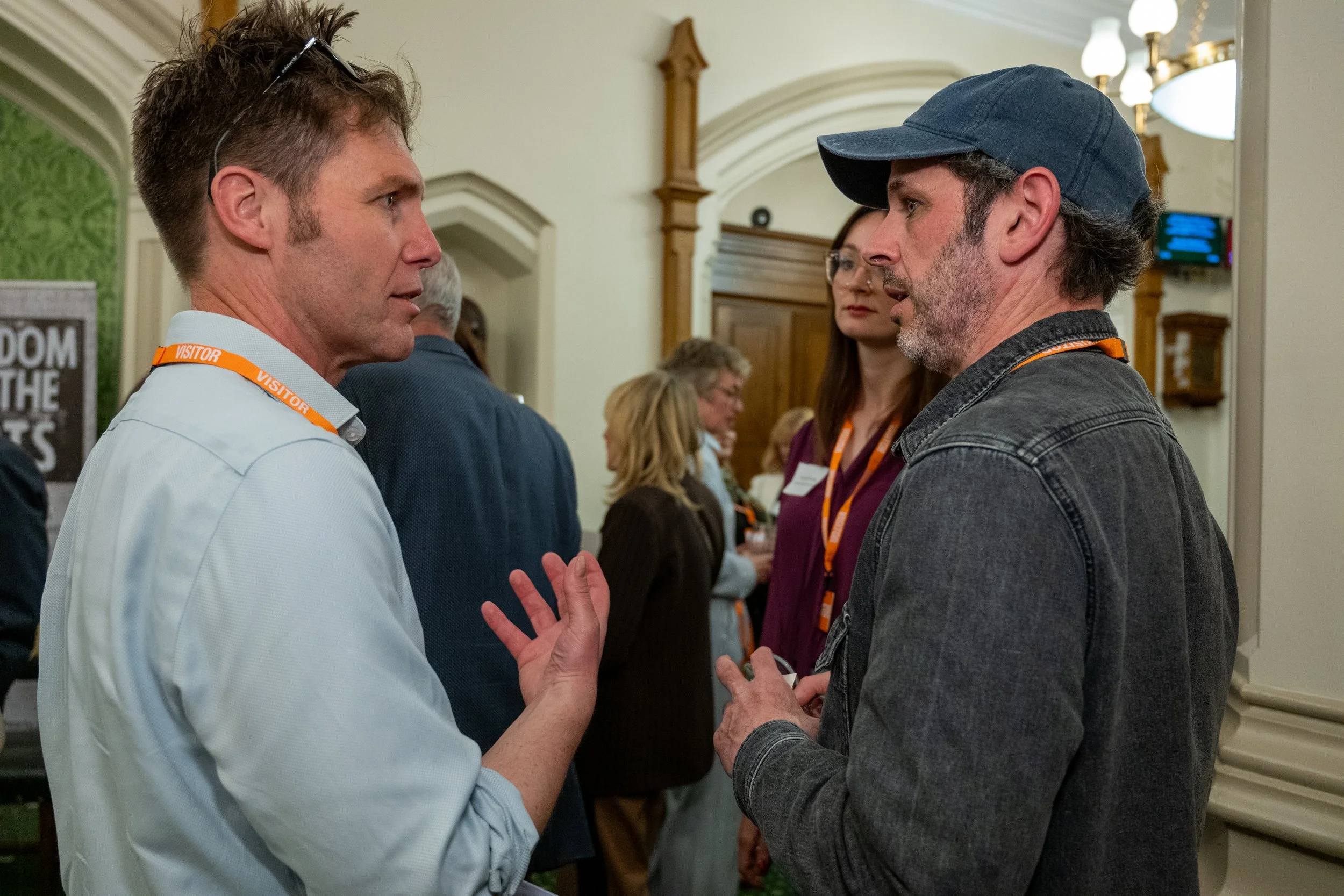
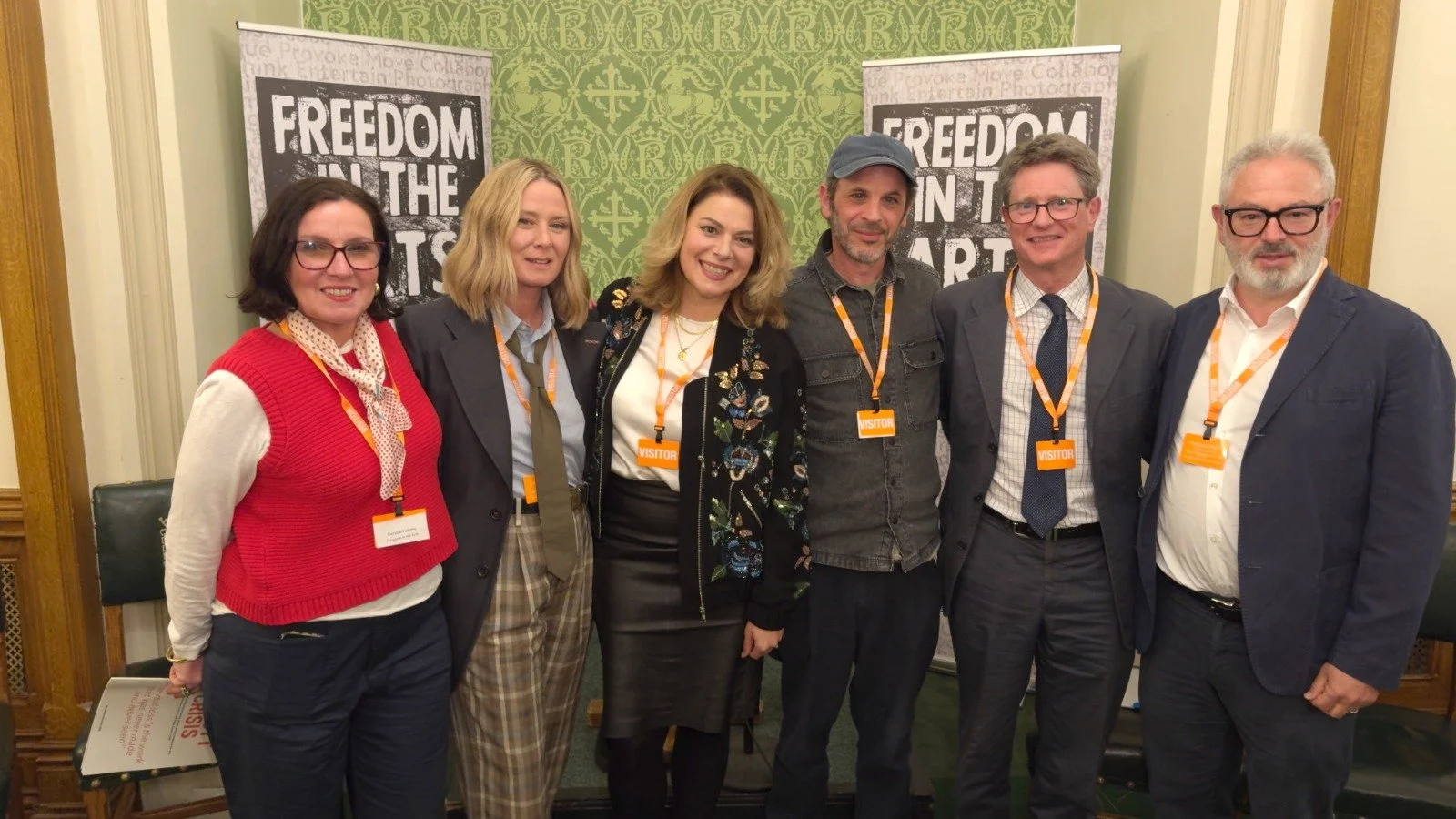
Freedom in the Arts Parliamentary Launch
Churchill Room, Palace of Westminster
27 April 2026
Josh Breslaw on Oi Va Voi, cancellation and Jewish cultural life
At the parliamentary launch of The New Boycott Crisis and the Art Beyond Boycott Toolkit, Josh Breslaw spoke about the cancellation of Oi Va Voi concerts in the UK, the pressure placed on Jewish artists, and the growing danger of a cultural world in which art is judged not on its merits but through identity and politics.
Josh Breslaw is a musician and member of the band Oi Va Voi, whose work draws on Jewish musical traditions and mixes them with a contemporary mainstream sound. Over more than two decades, the band has built an international following for music that crosses boundaries of culture, geography and genre. Breslaw has become an important voice on the pressures now facing Jewish artists and the need for institutions to respond more fairly and confidently.
Churchill Room, Palace of Westminster, 27 April 2026
As one of the report’s most high-profile case studies, Josh Breslaw brought lived experience to the evening. In a powerful and deeply personal speech, he described what it meant for a British Jewish band to be cancelled in the UK after years of boundary-crossing work, and warned against a cultural climate in which artists are judged through identity, association and political assumption rather than artistic merit.
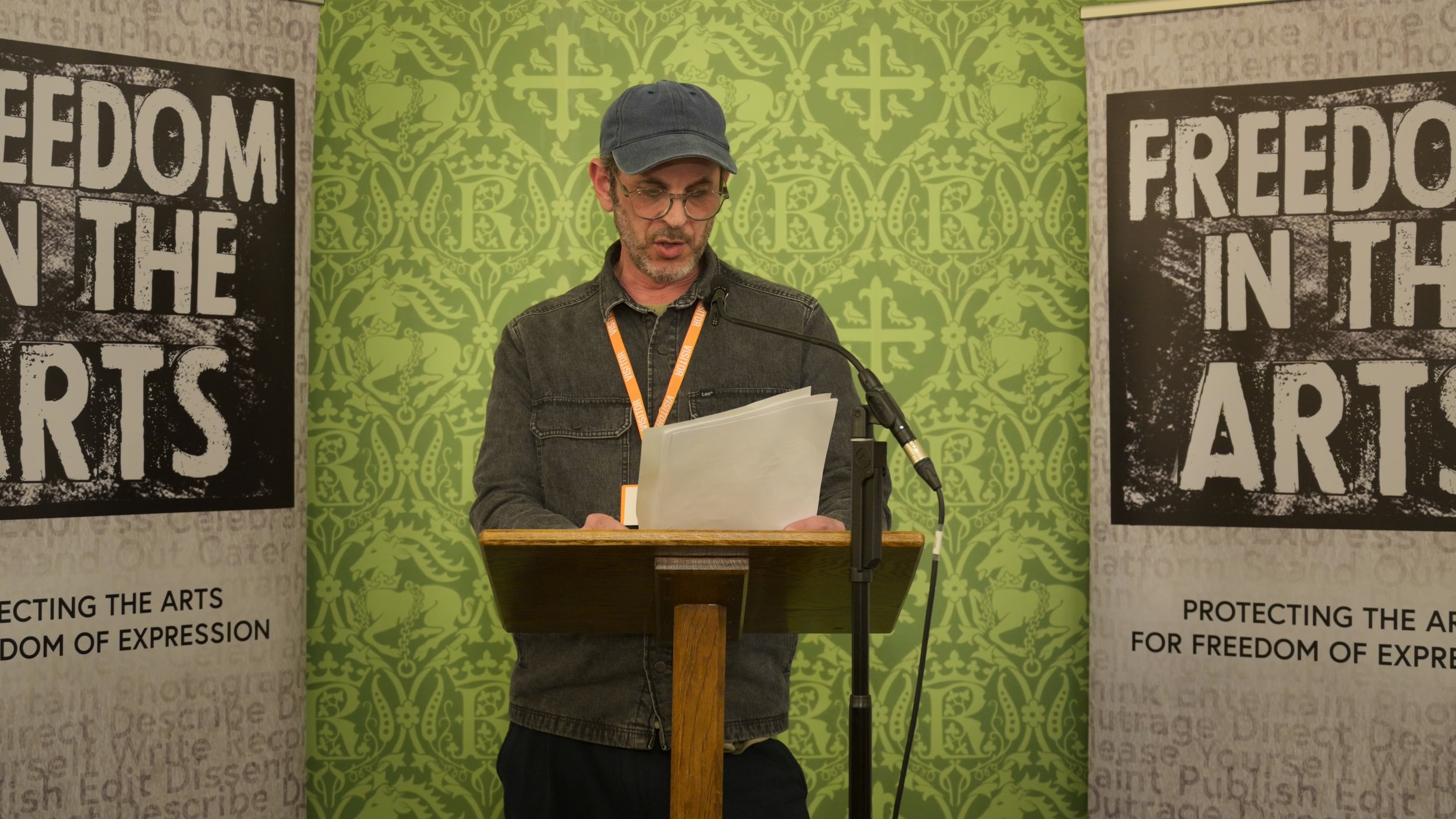
Full Speech Film Link HERE
For over 20 years my band Oi Va Voi has been playing music that draws on its Jewish culture. We use the old sounds, melodies and stories from Jewish history and mix them with a modern, mainstream sound. Our music is socially conscious and human. We have played in many places around the world and we have been really proud to represent a little bit of British Jewish culture.
Although the heart of the band is Jewish, we have never restricted ourselves to only working with Jewish musicians in the band. In the early days at the start of our success we were nominated for a BBC Music Award in the category called ‘Boundary Crossing’ and throughout our career we have continued to cross boundaries. We perform with musicians that we want to perform with regardless of ethnicity or passport, and we perform for people in countries when we are invited to perform. The perfect example of this British Jewish band called Oi Va Voi crossing boundaries, is the fact that one of our biggest fanbases is in Turkey, a muslim majority country, where we have never once been questioned about our position on the actions of our or any other government.
Last May Oi Va Voi were on a tour promoting our 5th album. We had just played shows in Holland, Belgium, Hungary and Turkey, all great shows with no problems. We arrived back in the UK for a run of 4 shows starting in Bristol. I got word that the venue in Bristol had received a complaint from a Pro Palestinian activist group who were asking for our show to be cancelled because we had played in Israel before and we had an Israeli singer performing with us. A call was set up with the venue and I understood we were going to talk about how to make sure the show could go ahead safely. In the call I was told that the venue was supporting the protest group and they were canceling our show. This was followed by a statement on social media explaining that Oi Va Voi did not meet the ethical standards of their venue. This was obviously devastating and althoughour shows in Cambridge and London went ahead, we were also cancelled in Brighton for the same reasons as Bristol. The Brighton cancellation was particularly painful for me as it's where I live and where my children go to school.
I won't go into detail now about the overall fall out for me on that cancellation but as someone who has performed as a musician with my Jewish band for over 20 years, to be cancelled in your home town for being Jewish is a very depressing experience.
To dare to be jewish in artistic spaces today means that strangers and activists believe that they have the right to demand you take a position on the issues that are most important to them. If you decline to take a public position because either you think that your creative work speaks for itself, or that taking a position may require more nuance than the person demanding it can understand, then a position will be taken for you. You will then be judged on the position that someone took for you. The most likely outcome is that you will be publicly cancelled, as happened to me and my band, or silently pushed out, as is happening to many others. Our cancellation was both racist and xenophobic.
These are not words usually associated with the British arts sector. My band was pulled up, questioned, and cancelled because of our Jewish heritage, that’s just racist. Our singer was cancelled not because of anything she has said or done, but because of where she was born. That is just xenophobic. If you do a thought experiment and imagine that my band was not British with Jewish heritage but was British with Chinese heritage and our singer was not Israeli but Pakistani, then try to imagine an arts organisation even questioning that band let alone canceling them, it just would not happen, there is no way any arts organisation would do that. And that is a good thing obviously. British cultural organisations should be judging art on its artistic merit and artists on the quality of their work,not asking people from specific ethnicities or countries to jump through hoops to satisfy one limited worldview.
There are a few different characteristics when it comes to venues and organisations cancelling music and art. I would say there are a small minority of people running venues and organisations that are driven by an ideology or a cause. These organisations believe that their cause is so righteous that the law doesn’t apply to them. They need to be shown where the lines are and told that the law does apply to them regardless of their cause. I saw with my own eyes how the penny slowly dropped for the venues that cancelled my band. When they were informed that they had broken discrimination law, their initial reaction was to loudly defend their chosen cause, but as the realisation set in that there are laws to protect people being discriminated against in this way and they were breaking those laws, they had no choice but to accept they had been wrong.
And then there are venues and organisations that are not ‘cause’ driven but theyare being bullied and intimidated by protest groups. These venues and organisations really need help. They need clear guidelines, they need the law to be understood more widely, they need local and national leaders to show some leadership, and they really need the support that is being offered by the Freedom In The Arts Toolkit.
The work that Freedom In The Arts has done in making this toolkit is so important because I think that there is a danger that through these boycotts, our cultural world will become smaller and if that happens our society will become poorer and less open.
One of the questions that follows from experiences like mine is how institutions and venues respond when pressure arrives. I’ve spoken a bit about it from an artist perspective but for a more expert view from a venue leader I’m pleased to hand over to Mark Tughan.